Many Indian businesses buy an ERP thinking it covers HR, then spend months realising the HR module is too shallow for their actual payroll and compliance needs. Others invest in a standalone HRMS and wonder if they should have gone with an ERP instead.
This guide explains exactly what HRMS and ERP do, where they overlap, where they do not, and which one makes sense for your business right now.
What is the Difference Between HRMS and ERP?
HRMS focuses entirely on HR. ERP connects every department in a business, including finance, supply chain, inventory, procurement, and HR, into one system. The difference is depth versus breadth.
An HRMS is purpose-built to manage every stage of an employee’s lifecycle. That means hiring, onboarding, attendance, payroll, compliance, appraisals, and exit. Every feature exists to serve the HR function.
An ERP is built to connect business operations across departments. Finance talks to procurement, procurement talks to inventory, and HR is one module among many. The HR module in an ERP handles the basics but is rarely deep enough to manage Indian statutory compliance without significant customisation.
What Does an ERP System Do for HR?
An ERP handles basic HR record management. It stores employee data, tracks headcount, and sometimes processes payroll at a surface level.
Most ERP HR modules can do:
Employee master data and org charts
Basic leave tracking
Simple payroll calculations
Integration with finance for salary disbursement
What most ERP HR modules cannot do without heavy customisation:
Auto-calculate Indian statutory deductions like PF, ESI, Professional Tax, and LWF
Handle state-specific compliance rules (Karnataka PT slabs, for example)
Generate Form 16, PF ECR files, or ESI contribution statements
Run 360-degree appraisals or OKR-based performance cycles
Provide employee self-service for payslips, leave applications, and tax declarations
For an Indian business with 50 to 500 employees, these gaps are not minor. Payroll errors and compliance penalties are real costs.
What Are the Limitations of Managing HR Through an ERP?
The three biggest limitations for Indian businesses are cost, compliance depth, and implementation time.
Cost: ERP implementation for an Indian SMB typically runs Rs. 5 lakh to Rs. 25 lakh and above, depending on the vendor, number of modules, and customisation required. That does not include annual licence fees or the internal resource cost of managing the rollout.
A standalone HRMS costs Rs. 40 to Rs. 80 per employee per month on average. For a 100-person company, that is Rs. 4,000 to Rs. 8,000 per month with zero implementation cost and a setup time measured in weeks.
Compliance depth: Indian payroll compliance is specific and changes regularly. PF contribution limits, ESI applicability thresholds, state-wise Professional Tax slabs, Labour Welfare Fund deductions, and TDS under Section 192 all require precise, up-to-date calculation logic.
ERP vendors build for global markets. India-specific compliance is either not built in or available only as a paid localisation module that still needs periodic manual updates. A dedicated HRMS built for Indian businesses handles this automatically.
Implementation time: ERP projects in India run 6 to 18 months on average. During that period, your HR team is still running payroll manually or on spreadsheets. A focused HRMS is live in weeks.
HRMS vs ERP: A Side-by-Side Comparison
Feature
HRMS
ERP (HR Module)
Primary focus
HR only
All business operations
Payroll depth
Full: salary, deductions, arrears, bank files
Basic: often limited to disbursement
India compliance (PF, ESI, PT, TDS)
Built-in and auto-updated
Requires customisation or add-on
Attendance and leave
Detailed with GPS, biometric, shifts
Basic tracking only
Performance management
OKRs, appraisals, 360 reviews
Minimal or absent
Employee self-service
Full ESS portal
Limited
Implementation time
2 to 8 weeks
6 to 18 months
Cost for 100-person Indian SMB
Rs. 4,000 to Rs. 8,000 per month
Rs. 5 lakh to Rs. 25 lakh upfront
Best for
SMBs and mid-market (20 to 1,000 employees)
Large enterprises with multi-department integration needs
Which One Should an Indian Business Choose?
For most Indian businesses with 20 to 500 employees, start with HRMS. Here is a simple way to think about it.
Choose HRMS if:
Your primary problem is payroll accuracy, attendance tracking, or statutory compliance
You have 20 to 500 employees and a small HR team
You need to be live quickly without a long implementation project
Your budget is limited and you want predictable per-employee pricing
You operate in India and need PF, ESI, PT, and TDS handled automatically
Choose ERP if:
You are a large enterprise with 500 or more employees and complex operations across finance, supply chain, and manufacturing
Your biggest problem is connecting departments, not HR operations specifically
You have the budget and internal resource for a 12-plus month implementation
HR is a secondary concern and basic headcount management is enough for now
💡 Honest Answer
If you are a 30-person startup in Koramangala or a 200-person IT company in Whitefield, an ERP is overkill and the HR module will not solve your payroll and compliance problems. A focused HRMS will.
Can You Use HRMS and ERP Together?
Yes, and many larger Indian companies do exactly that. The typical setup is a strong ERP handling finance, procurement, and operations, with a dedicated HRMS managing HR and payroll. The two systems share data through an API integration.
This gives you the depth of a purpose-built HRMS for HR functions and the breadth of an ERP for business operations. Payroll data flows from HRMS to ERP for financial reporting without manual exports.
If your business grows to this stage, most modern HRMS platforms support integration with popular ERP systems. You do not need to rebuild from scratch.
The Bottom Line
HRMS and ERP solve different problems. ERP connects your business. HRMS runs your HR.
For the vast majority of Indian SMBs, especially those dealing with monthly payroll, Karnataka statutory compliance, or growing headcount, an HRMS is the right first investment. It is faster to implement, built for Indian compliance, and a fraction of the cost.
Once your business reaches a scale where connecting finance, procurement, and HR in one platform makes sense, you can either upgrade to a full ERP or integrate your HRMS with an ERP alongside it.
If you are still managing payroll on spreadsheets or struggling with PT and PF filings, start with HR Software Bangalore. It is built specifically for businesses like yours, handles Karnataka compliance automatically, and takes under two hours to set up.
Frequently Asked Questions
HRMS can be a module within an ERP, but it is also available as a standalone product. The HR module inside most ERPs is much less detailed than a dedicated HRMS, especially for Indian statutory compliance requirements like PF, ESI, and Professional Tax.
Not effectively for most Indian SMBs. ERP HR modules typically do not handle India-specific compliance like state-wise Professional Tax, LWF deductions, or PF ECR file generation without expensive customisation. A standalone HRMS handles these out of the box.
HRMS is better for payroll, particularly in India. It includes built-in deduction logic for PF, ESI, PT, and TDS, generates payslips and Form 16, and creates bank transfer files. ERP payroll modules are designed for basic salary disbursement and require add-ons for Indian compliance.
Most small businesses with under 200 employees do not need a full ERP. The cost, implementation time, and complexity are not justified at that scale. A focused HRMS covers everything an SMB needs for HR and payroll at a much lower cost.
HRIS stores employee data and records. HRMS automates HR operations including payroll, attendance, and compliance. ERP integrates all business functions including HR, finance, and supply chain. For HR operations, HRMS is the most complete option among the three.
Ready to Eliminate Manual HR Work?
Join 500+ Bangalore businesses that have automated payroll, attendance, and Karnataka compliance with HR Software Bangalore.
Bangalore has over 67,000 registered companies. Every one of them eventually needs HRMS software. But with dozens of options available, choosing the right one feels overwhelming.
Here is the real problem. Most HRMS platforms are built for a national audience and treat Karnataka compliance as an afterthought. They cannot auto-calculate Professional Tax with the February Rs.300 rule. They forget LWF deductions in June and December. They file PF to the wrong regional office.
We tested and reviewed 13 HRMS platforms available to Bangalore businesses. Each one rated on Karnataka compliance, payroll accuracy, ease of use, pricing, and support quality. Honest reviews with the good and the bad. No sponsored rankings. Updated for March 2026 with latest pricing and features.
How We Evaluated These 13 HRMS Platforms
We rated each platform on five criteria:
Karnataka Compliance (35% weight). Does it auto-calculate PT with the February Rs.300 rule? Auto-file ESI and PF? Handle LWF? Track Shops and Establishments Act provisions?
Ease of Use (15% weight). Setup time, interface quality, mobile app, learning curve for HR teams.
Pricing Value (15% weight). Cost per employee, hidden fees, what is included versus what costs extra.
Support Quality (10% weight). Response time, Bangalore-based team availability, phone versus email versus chatbot.
We tested each platform directly or conducted extensive research including user reviews from G2, Capterra, and direct customer interviews.
The 13 Best HRMS Software in Bangalore
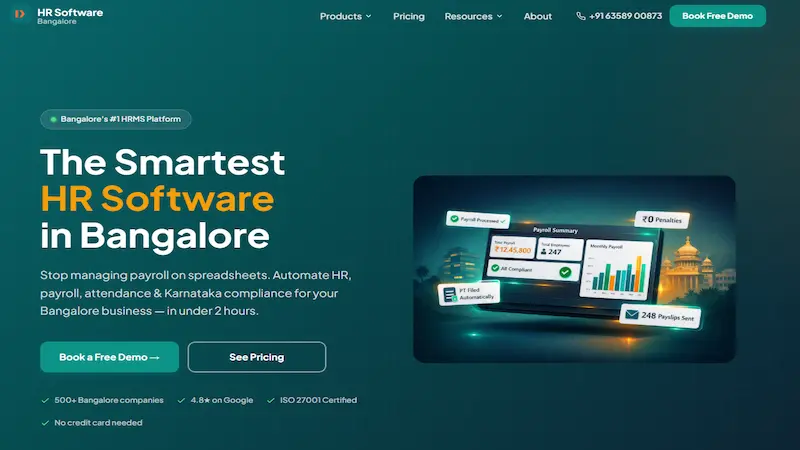
1. HR Software Bangalore (Best Overall for Karnataka Compliance)
Starting price: Rs.49/employee/month Best for: Bangalore companies wanting full Karnataka compliance out of the box
What we like: Pre-configured Karnataka PT with the February Rs.300 rule. Zero manual setup required. ESI and PF auto-filed to Bangalore EPFO and ESIC regional offices. LWF deduction in June and December handled automatically. Kannada language payslip support. Dedicated Bangalore-based support team with real humans, not chatbots. Fastest implementation on this list at 48 hours. The most affordable full-featured option available.
What could improve: Newer brand with a smaller customer base than decade-old competitors. Advanced analytics module is still developing.
Karnataka Compliance Rating: 5/5 Verdict: If Karnataka compliance is your top priority, this is the clear winner. No other platform matches the depth of local compliance automation at this price point.
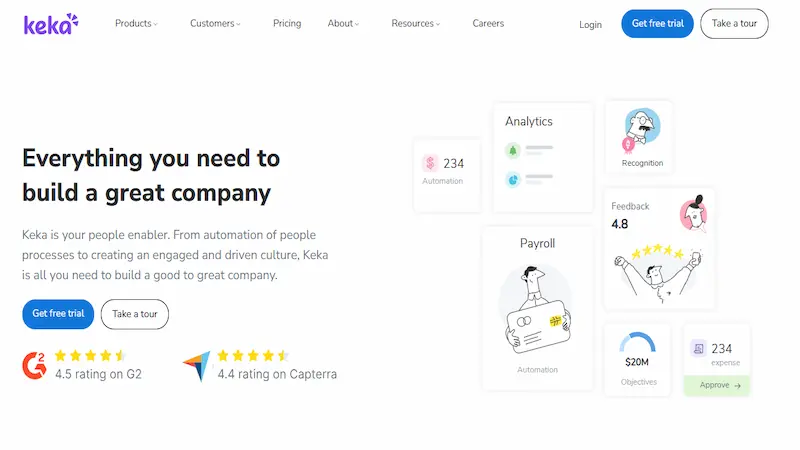
Starting price: Approximately Rs.99/employee/month Best for: Mid-size companies (100-500) wanting strong appraisal and OKR features
What we like: Excellent performance management module with OKRs, continuous feedback, and 360-degree reviews. Modern, polished interface that feels premium. Good integration ecosystem with Slack, Teams, and Google Workspace. Decent payroll engine.
What could improve: Higher pricing than local alternatives. Karnataka PT compliance exists but needs manual verification each month. Support is Hyderabad-based, not Bangalore. No free tier available.
Karnataka Compliance Rating: 3/5 Verdict: Great product if performance management is your primary need. For pure Karnataka compliance, look elsewhere.
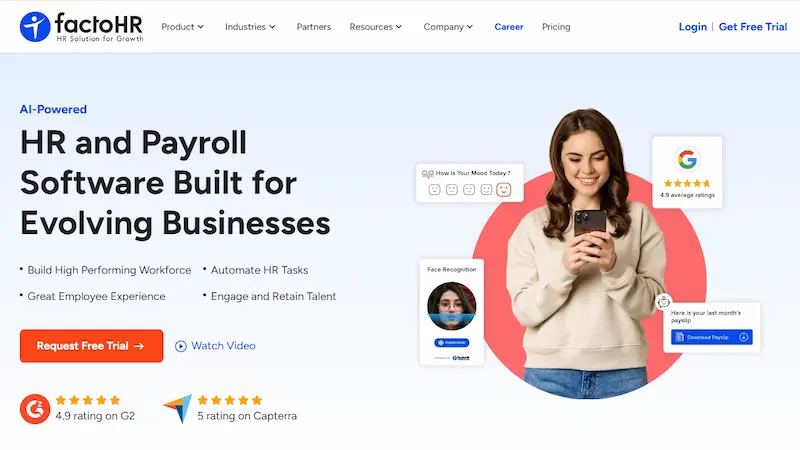
3. factoHR (Best All-in-One Platform, Second Best Overall)
Starting price: Approximately Rs.55/employee/month Best for: Mid-size companies (50-500) wanting comprehensive HR plus payroll in one platform
What we like: This is the second strongest platform on our entire list. factoHR delivers a true full-suite experience covering payroll, attendance, recruitment, performance, and expense management all included in a single subscription. The mobile app is strong with punch-in, leave application, and payslip access all working smoothly. Statutory compliance coverage is solid across Indian states. Biometric and GPS attendance are built natively into the platform. The depth of features at this price point is impressive and very few platforms match it.
What could improve: Karnataka-specific compliance needs manual configuration. It is not fully plug-and-play for Bangalore businesses the way locally built solutions are. The UI is functional and reliable but not as visually polished as Keka. Support response can slow down during peak payroll processing days at month-end.
Karnataka Compliance Rating: 3.5/5 Verdict: If you want the most complete all-in-one HRMS at a reasonable price, factoHR is hard to beat. It is the second best platform overall on this list. The only area where it falls behind the top pick is Karnataka-specific auto-compliance, which requires some manual setup.
4. greytHR (Best Free Tier for Small Teams)
Starting price: Free for under 25 employees. Paid from approximately Rs.150/employee Best for: Small Bangalore businesses wanting to start at zero cost
What we like: Genuine free plan for companies under 25 employees. Also a Bangalore-based company that understands Karnataka requirements. Over 15 years in the market with 30,000+ customers. Solid payroll and compliance engine on paid plans.
What could improve: Interface feels dated compared to newer competitors. Mobile app has received mixed reviews with reports of bugs and slow loading. Feature updates roll out slower than competitors. Free plan has significant feature limitations.
Karnataka Compliance Rating: 4/5 Verdict: Best entry point if your budget is zero. Plan to upgrade to a paid plan or switch platforms when you outgrow the free tier.
5. Zoho People (Best for Zoho Ecosystem Users)
Starting price: Approximately Rs.48/employee/month. Payroll is a separate subscription. Best for: Companies already using Zoho CRM, Books, and Desk
What we like: Affordable HR features with a solid foundation. Seamless experience if you already live in the Zoho ecosystem. Good leave and attendance modules. Generous 15-day free trial.
What could improve: Payroll is a completely separate product called Zoho Payroll requiring an additional subscription. Karnataka PT slabs require manual configuration. Support is generic and not specialized for Karnataka businesses. You end up managing two products instead of one.
Karnataka Compliance Rating: 2/5 Verdict: Only makes sense if you are already a committed Zoho user. Otherwise, you are paying for two products to get what others offer in one.
6. Darwinbox (Best for Large Enterprise)
Starting price: Custom pricing (You have to request for Quote) Best for: Companies with 500+ employees needing advanced analytics and AI
What we like: Strong AI and analytics capabilities for workforce planning. Enterprise-grade workflows and deep customization options. Used by large Indian companies. Good multi-country support for global operations.
What could improve: Expensive and overkill for companies under 300 employees. Implementation takes 2-6 months. No transparent pricing on the website. Not designed for SMB simplicity.
Karnataka Compliance Rating: 4/5 Verdict: If you have 500+ employees and the budget to match, Darwinbox delivers enterprise value. For everyone else, you are overpaying for features you will never use.
7. HROne (Best for Mid-Market Balance)
Starting price: Approximately Rs.99/employee/month Best for: Mid-market companies (100-500) wanting a balanced feature set
What we like: Decent payroll and attendance modules. Good mobile app experience. Growing presence in South India with increasing Bangalore adoption.
What could improve: Karnataka-specific compliance features are limited compared to local players. Priced higher for what you get when compared to Bangalore-built alternatives. Smaller support team.
Karnataka Compliance Rating: 3/5
8. sumHR (Most Affordable)
Starting price: Approximately Rs.49/employee/month Best for: Very early-stage startups on a tight budget
What we like: Lowest price on this entire list. Simple, clean interface with minimal learning curve. Quick setup that gets you running fast.
What could improve: Basic feature set with no advanced modules. Limited compliance automation for Karnataka. No performance management module. You will likely outgrow it quickly as you scale.
Karnataka Compliance Rating: 2/5
9. Pocket HRMS (Best AI Features)
Starting price: Approximately Rs.60/employee/month Best for: Companies wanting an AI chatbot for employee queries (50-500 employees)
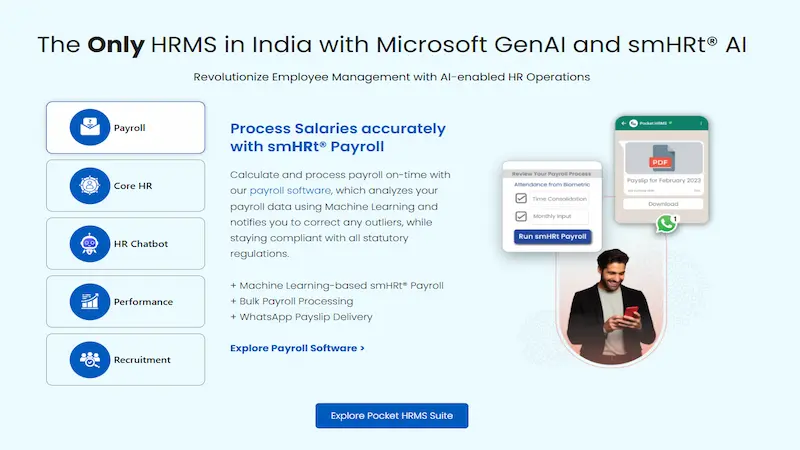
What we like: AI chatbot called smHRty that handles common employee questions automatically. Cloud-based with modern architecture. Reasonably priced for the features offered.
What could improve: Karnataka compliance features are limited. The AI chatbot is useful but not a substitute for solid compliance automation. Smaller brand presence in the Bangalore market.
Karnataka Compliance Rating: 2/5
10. Qandle (Best for Employee Experience)
Starting price: Approximately Rs.49/employee/month Best for: Companies focused on employee engagement and modern HR experience
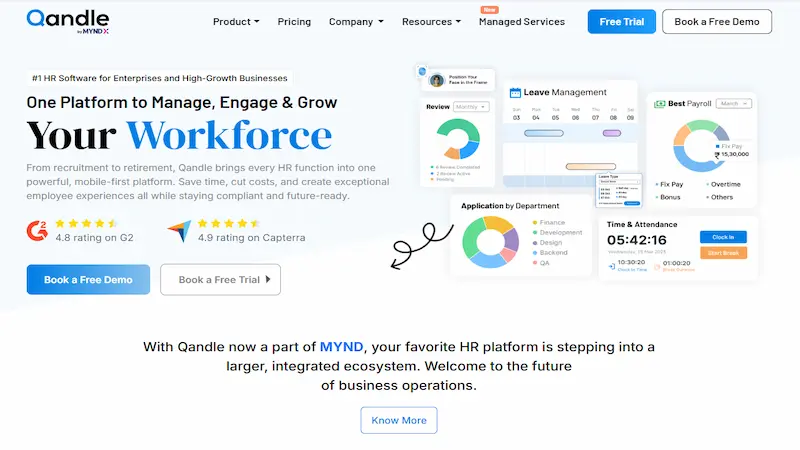
What we like: Modern, clean interface design. Good employee engagement and social features. Strong focus on making the HR experience enjoyable for employees.
What could improve: Still a growing platform with a developing feature set. Depth of compliance features does not match established players. Integration ecosystem is still being built out.
Karnataka Compliance Rating: 2/5
11. Spine HR (Best for Manufacturing and Traditional Businesses)
Starting price: Approximately Rs.330/employee/month Best for: Manufacturing, construction, and traditional businesses managing blue-collar workforce
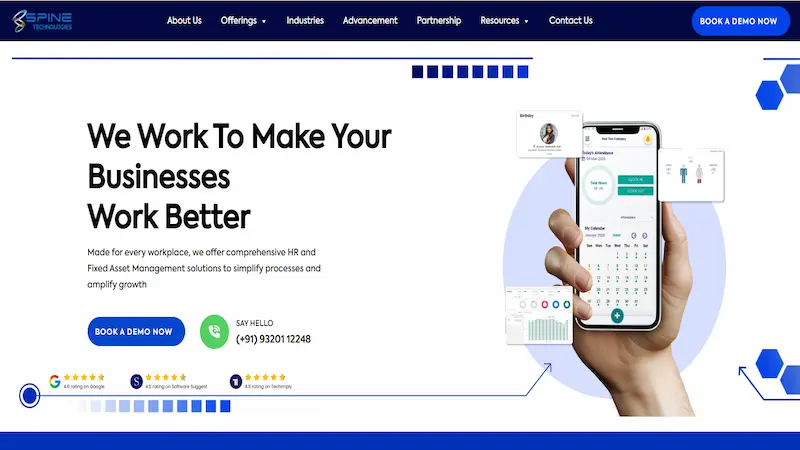
What we like: Established and reliable platform. Handles shift-heavy and blue-collar workforce management well. Affordable pricing for the features provided.
What could improve: Interface feels outdated and not suited for modern IT or startup culture. Mobile app is basic with limited functionality.
Karnataka Compliance Rating: 3/5
12. BambooHR (Best International HRMS)
Starting price: Custom pricing (approximately $10/employee/month) Best for: Bangalore offices of international companies needing global HR standards
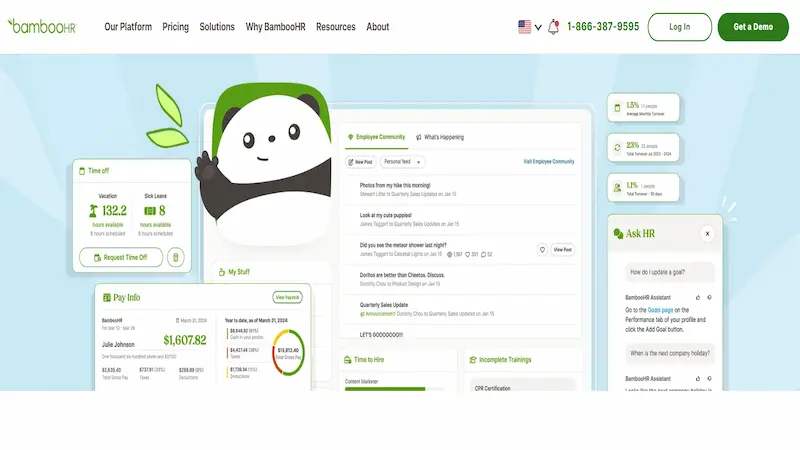
What we like: Beautiful, intuitive interface that sets the standard for HR software design. Strong onboarding and offboarding workflows. Excellent reporting and analytics. Popular globally with strong brand trust.
What could improve: Not built for Indian compliance. Karnataka PT, ESI, and PF are not natively supported. Expensive for the Indian market with pricing in USD. Indian payroll requires third-party integration.
Karnataka Compliance Rating: 1/5
13. Freshteam by Freshworks (Best for Recruitment-Heavy Companies)
Starting price: Free for basic recruitment. Paid from approximately Rs.70/employee Best for: Bangalore companies hiring aggressively who need a strong ATS
What we like: Excellent recruitment and applicant tracking module built on the Freshworks platform. Free plan available for recruitment features. Strong Bangalore presence as Freshworks has deep roots in South India. Good candidate experience.
What could improve: Payroll is not included. You need a separate payroll solution. HR features beyond recruitment are limited. Not a complete HRMS on its own.
Karnataka Compliance Rating: 2/5
Complete Comparison Table
HRMS Software
Price
Karnataka PT
ESI/PF
Mobile App
Compliance
Best For
HR Software Bangalore
Starting ~Rs.49/emp
Strong support
Yes
iOS + Android
5/5
Karnataka-focused compliance
Keka
Starting ~Rs.60/emp
Partial / needs verification
Yes
Yes
3/5
Performance management
factoHR
Starting ~Rs.55/emp
Needs configuration
Yes
Yes
3.5/5
All-in-one mid-market
greytHR
Free (up to 25 emp) / ~Rs.50+
Supported
Yes
Yes
4/5
Small teams / free tier
Zoho People
Starting ~Rs.45/emp (payroll separate)
Manual setup
Separate module
Yes
2/5
Zoho ecosystem users
Darwinbox
Custom pricing (~Rs.1600+/emp)
Supported
Yes
Yes
4/5
Enterprise (500+)
HROne
Starting ~Rs.85+/emp
Limited
Yes
Yes
3/5
Mid-market
sumHR
Starting ~Rs.35/emp
Basic support
Basic
Yes
2/5
Budget startups
Pocket HRMS
Starting ~Rs.60+/emp
Limited
Yes
Yes
2/5
SMBs with AI features
Qandle
Starting ~Rs.55/emp
Limited
Partial
Yes
2/5
Employee experience
Spine HR
Custom pricing (~Rs.300+/emp)
Basic support
Yes
Basic
3/5
Manufacturing / traditional
BambooHR
Custom pricing (~$10/emp)
Not supported natively
No
Yes
1/5
International companies
Freshteam
Free / ~Rs.80+/emp
Not applicable (no payroll)
No
Yes
2/5
Recruitment-focused
Pricing is indicative as of March 2026 and may change based on vendor updates. Actual pricing may vary based on employee count and plan selected.
What to Look for if You are a Bangalore Company
Not all HRMS platforms are Karnataka-ready. Here are the 7 non-negotiable criteria for Bangalore businesses:
1. Auto PT calculation with the February Rs.300 rule. This single requirement eliminates most national platforms. If you have to manually adjust PT in February, the software is not ready for Karnataka.
2. ESI threshold monitoring. The system should auto-detect when an employee gross salary crosses Rs.21,000 and adjust ESI calculations accordingly.
3. PF filing to the correct Bangalore EPFO regional office. Filing to the wrong regional office code creates compliance issues.
4. LWF deduction in June and December. Small amounts (Rs.20 employee, Rs.40 employer) but legally mandatory. Most software simply forgets this.
5. Karnataka Shops and Establishments Act tracking. 9 hours/day maximum, 48 hours/week, overtime at 2x wages. Your HRMS should monitor this.
6. Kannada language payslip support. Not legally required but appreciated by employees who prefer regional language documents.
7. Local support team in Bangalore. When payroll is stuck at 11 PM on month-end, you need someone who picks up the phone in IST.
If your HRMS cannot tick all 7 boxes, it is not ready for Bangalore.
Frequently Asked Questions
For budget-conscious startups, sumHR at Rs.35/employee is the cheapest option. For proper Karnataka compliance from Day 1, HR Software Bangalore at Rs.49/employee offers the best value with auto PT, ESI, PF, and LWF included.
greytHR offers a free plan for companies under 25 employees with basic payroll and leave management. Freshteam offers free recruitment features. For full compliance automation, paid plans start at Rs.35-49/employee.
Most providers offer free data migration. HR Software Bangalore completes migration within 48 hours. Upload your employee Excel data and the team handles everything including historical payroll records.
Yes. Karnataka Professional Tax registration is mandatory from your first employee earning above Rs.25,000. PF becomes mandatory at 20 employees. Starting compliant is far cheaper than fixing penalties later.
HR Software Bangalore was built specifically for Karnataka businesses. It auto-handles PT (including the February Rs.300 rule), ESI, PF, LWF, Gratuity, and Shops and Establishments Act tracking. factoHR is the second strongest overall but requires manual Karnataka configuration. No other platform on this list matches the top two for Bangalore.
Final Verdict
For Karnataka compliance, HR Software Bangalore is the clear winner at Rs.49/employee. For all-round capability, factoHR is the second best overall. For a free starting point, greytHR. For performance management, Keka. For enterprise scale, Darwinbox.
The best HRMS is the one that handles your Karnataka compliance without manual intervention, fits your budget, and has a support team that actually picks up the phone.
If you are running a business in Bangalore, whether it is a 15-person startup in Koramangala or a 400-person IT company in Whitefield, you have probably heard the term HR software in every HR conversation, software comparison, and LinkedIn post.
But what does HR software actually mean for your business? Is it just payroll software? Do you really need it at your stage? And most importantly, can HR software handle Karnataka’s compliance requirements like Professional Tax, ESI, and PF without errors? This guide breaks it down in plain language so you can make the right decision for your Bangalore business.
What is HRMS?
HRMS stands for Human Resource Management System. It is a cloud-based solution that automates and centralizes every HR function in one place. Payroll, attendance, recruitment, performance reviews, statutory compliance, and employee self-service are all managed through a single dashboard.
What started as basic payroll tools has evolved into complete employee lifecycle management. From hiring to exit, HR software handles every process including payslips, leave requests, appraisals, and compliance filings.
For Bangalore businesses, HR software is no longer optional. With thousands of companies competing for talent and strict Karnataka compliance requirements, managing HR on spreadsheets creates risk and inefficiency.
HRMS vs HRIS vs HCM: What’s the Difference?
These three acronyms get thrown around interchangeably, but they serve different purposes. Understanding the distinction helps you invest in the right solution for your company’s stage and size.
Feature
HRIS
HRMS
HCM
Full Form
Human Resource Information System
Human Resource Management System
Human Capital Management
Primary Focus
Employee data storage and records
Complete HR operations and automation
Strategic workforce planning and analytics
Payroll
Basic or none
Full payroll with statutory compliance
Advanced payroll and predictive analytics
Recruitment
Not included
Built-in ATS and onboarding
ATS, talent pipeline, succession planning
Performance
Not included
OKRs, reviews, 360° feedback
Advanced performance and learning
Compliance
Manual
Automated (PT, ESI, PF, LWF)
Automated, multi-country compliance
Best For
Small teams under 20 employees
SMBs and mid-market (20-1000 employees)
Large enterprises (500+ employees)
Typical Cost
₹20-35/employee/month
₹40-80/employee/month
₹100+/employee/month
For most Bangalore businesses, whether you are a 30-person Koramangala startup or a 500-person Whitefield IT company, HRMS hits the sweet spot. It gives you everything you need without the complexity and cost of enterprise HCM platforms. You get full payroll automation, Karnataka compliance, recruitment tools, and performance management in one package.
8 Features Every HRMS Should Have
Not all HRMS platforms are built equal. Before you evaluate options, here is what a complete HRMS must offer:
Payroll Processing: HR software should automatically calculate salaries, deductions such as PF, ESI, PT, and TDS, and generate bank transfer files. Payroll that takes days manually should be completed in minutes.
Attendance and Leave Management: GPS check-in, biometric integration, shift scheduling, and overtime tracking. Karnataka law mandates 9-hour daily and 48-hour weekly limits. Your HRMS attendance management module should track this automatically.
Statutory Compliance: This is where most national HR software fail Bangalore businesses. Your system must auto-calculate Karnataka Professional Tax (including the ₹300 February rule), file ESI and PF to the correct Bangalore regional offices, deduct LWF in June and December, and provision gratuity. If it cannot do this without manual intervention, it is not ready for Karnataka.
Employee Self-Service: Payslips, leave applications, tax declarations, reimbursement claims, and HR ticket raising, all accessible on a mobile app. This alone helps reduce routine HR queries significantly.
Recruitment and Onboarding: Post jobs to Naukri and LinkedIn from one dashboard, track candidates through interview stages, generate offer letters, and trigger automated onboarding workflows. In Bangalore’s competitive talent market, delays in hiring can result in losing strong candidates.
Performance Management: Set OKRs, run quarterly or annual appraisal cycles, collect 360-degree feedback, and calibrate ratings with bell curves. Structured performance processes directly reduce Bangalore’s chronic IT attrition problem.
Reports and Analytics: Headcount trends, attrition rates, payroll cost analysis, department-wise breakdowns, and compliance status dashboards. Data-driven HR decisions replace gut feelings.
Why Bangalore Businesses Need HRMS in 2026
Every city has HR challenges. Bangalore has unique ones that make HRMS adoption particularly urgent.
Karnataka compliance is genuinely complex
Your business must handle Professional Tax with the updated 2025-26 slabs (including the ₹300 February deduction that trips up most manual calculations), ESI for employees earning under ₹21,000, PF contributions filed to the Bangalore EPFO regional office, Labour Welfare Fund deductions twice a year, and Karnataka Shops and Establishments Act provisions on working hours, overtime, and leave. Managing this manually across 50 or 100 employees is not just inefficient. Managing compliance manually increases the risk of errors, penalties, and delays.
Attrition in Bangalore’s IT sector runs between 15-25% annually
Without structured performance management, clear goal-setting, and regular feedback mechanisms, your best people leave for companies that offer these. An HRMS with built-in performance and engagement tools is a retention investment, not just an HR tool.
Multi-location and hybrid teams are the norm
Your developers might be in Whitefield, your sales team in Koramangala, and your support team working from home. A centralized HRMS gives you one dashboard to manage attendance, payroll, and compliance across every location and work mode.
Bangalore startups scale fast
Going from 10 employees to 200 in 18 months is common here. What works on spreadsheets at 10 people collapses at 50. HRMS grows with you, same system from your first employee to your five-hundredth.
The cost of getting it wrong keeps rising
A single missed PF filing can attract interest, damages, and even imprisonment under the EPF Act. A PT calculation error across 100 employees for 3 months creates a ₹92,000+ liability. HRMS eliminates these risks entirely.
How to Choose the Right HRMS for Your Business
With dozens of HRMS platforms available, choosing the right one can feel overwhelming. Use this 7-point checklist to cut through the noise.
Does it auto-handle Karnataka PT, ESI, PF, and LWF? This is the number one deal-breaker for Bangalore businesses. If you have to manually configure Professional Tax slabs or remind the system about the February ₹300 rule, move on. Karnataka compliance should work out of the box with zero configuration.
Is payroll included or a separate product? Some platforms split HR and Payroll into separate subscriptions. You end up paying twice and managing two systems. Look for all-in-one platforms where payroll is fully integrated.
Does it have a mobile app for employees? Not just a mobile-responsive website. A proper iOS and Android app. Your employees should mark attendance, apply for leave, and view payslips from their phones without opening a browser.
What is the implementation timeline? Enterprise platforms can take 2-6 months to implement. For most Bangalore SMBs, you need a platform that goes live within one week. Anything longer and you lose momentum.
Is pricing transparent? Look for clear per-employee, per-month pricing on the website. If you have to “contact sales” just to see the price, expect surprises later.
Is there a local support team? When payroll is stuck at 11 PM on month-end, you need someone who picks up the phone in IST. Not a chatbot or a ticket system with 48-hour response times. Bangalore-based support makes a real difference.
Can you try before you buy? A 14-day free trial with full features tells you more than any demo or sales pitch. If a platform does not offer a free trial, ask yourself why.
If a platform checks all seven boxes, you have found the right HRMS for your Bangalore business.
How Much Does HRMS Cost in Bangalore?
HRMS pricing in India typically follows a per-employee, per-month model. Here is how the market breaks down.
Budget tier (₹35-50/employee/month). Platforms like sumHR offer basic HR and payroll at the lowest price point. Good for very early-stage startups that need minimal features. Karnataka compliance automation is typically limited at this tier.
Mid-range tier (₹50-80/employee/month). This is where most Bangalore businesses find the best value. Platforms like HR Software Bangalore (starting at ₹49/employee), greytHR, and Keka offer comprehensive features including full payroll, attendance, recruitment, and compliance automation.
Enterprise tier (₹100+/employee/month). Darwinbox, SAP SuccessFactors, and similar platforms cater to large organizations needing advanced analytics, custom workflows, and multi-country support. Typically overkill for companies under 500 employees.
From an ROI perspective, spending ₹49 per employee per month on HRMS saves your business ₹3-5 lakhs annually in compliance penalty risk alone, plus 40+ hours of HR team time every month. The software pays for itself within the first quarter. → Check our pricing
Frequently Asked Questions
HRMS stands for Human Resource Management System. It is a cloud-based software that automates payroll, attendance, recruitment, performance management, and statutory compliance for businesses.
Yes. HRMS is valuable from 10 employees onward, especially in Bangalore where Karnataka compliance (PT, ESI, PF, LWF) is mandatory regardless of company size. The cost of manual errors far exceeds the software subscription.
Payroll is one module within a full HRMS. While payroll software only handles salary processing and deductions, HRMS additionally covers attendance tracking, recruitment, performance management, employee self-service, and compliance automation.
Good HRMS platforms auto-calculate Karnataka PT based on the 2025-26 slab rates, including the ₹300 February deduction rule. They also generate e-PRERANA challans for filing. Always verify this capability before purchasing. Many national platforms handle it poorly.
For most Bangalore SMBs, implementation takes 2-7 days depending on company size and data complexity. Enterprise implementations can take longer. HR Software Bangalore completes full setup within 48 hours including data migration and compliance configuration.