Most Bangalore employers know they need to follow the Karnataka Shops and Establishments Act. Few know exactly what it demands of them, and that gap is where compliance penalties come from.
This guide breaks the Act down by what it actually requires you to do: who must register, what working hours you can set, what leave your employees are owed, which registers you must maintain, and what happens if you miss any of it.
Key Takeaways
- Understand what the Karnataka Shops and Establishments Act covers
- Register your shop/commercial establishment within 30 days of starting operations.
- Enforce strict hour limits: 9/day, 48/week, and pay overtime at 2x wages.
- Track and settle leave correctly, including earned leave encashment at exit.
- Meet wage deadlines (7th or 10th) and allow only lawful deductions.
- Keep audit-ready records and welfare standards to avoid inspection penalties.
What Is the Karnataka Shops and Establishments Act?
The Karnataka Shops and Establishments Act, 1961 is a state labour law that regulates working conditions in shops and commercial establishments across Karnataka. The Karnataka Labour Department administers it.
The Act covers working hours, overtime, wages, leaves, health and safety, and record-keeping. It applies regardless of the size of your business; a two-person office in Indiranagar and a 500-seat BPO in Electronic City both fall under it.
To understand how wages translate into actual employee payouts, you can also review CTC vs in-hand salary calculations.
Who Does the Karnataka Shops and Establishments Act Apply To?
The Act applies to any establishment that falls under the definition of a “shop” or “commercial establishment” in Karnataka.
Shops include premises where goods are sold (wholesale or retail) or where services are rendered to customers. Retail outlets, supermarkets, service centers, and showrooms qualify.
Commercial establishments include offices, storerooms, warehouses, hotels, restaurants, eating houses, theatres, and other places of public entertainment. Most IT companies, startups, consulting firms, and co-working spaces in Bangalore operate as commercial establishments under this Act.
The following are exempt:
- Factories governed by the Factories Act, 1948
- Establishments covered by the Central Government
- Agricultural establishments
Registration Under the Karnataka Shops and Establishments Act
Every shop or commercial establishment must register under the Act within 30 days of starting operations.
Documents Required for Registration
Keep these ready before you begin the application:
- Name and address of the establishment
- Name of the employer and proof of identity (Aadhaar, PAN, or passport)
- Nature of the business
- Number of employees at the time of registration
- PAN card of the business
- Proof of business address (rent agreement or ownership document)
- Bank account details
How to Register Online (Step-by-Step)
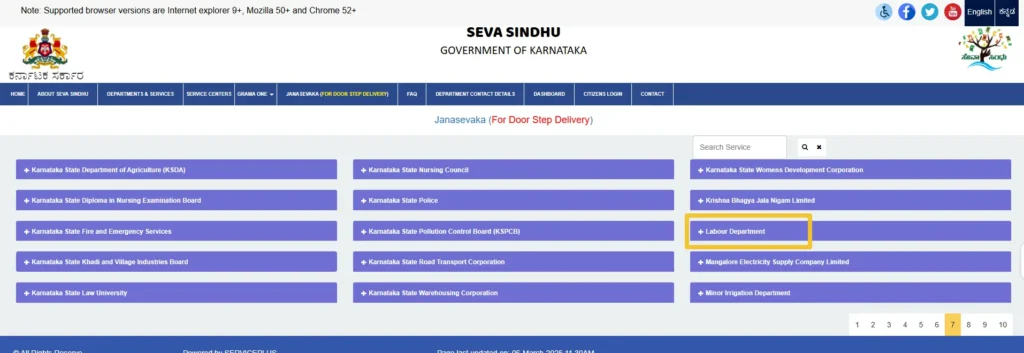
Karnataka has moved registration to the Seva Sindhu portal. Follow these steps:
- Visit sevasindhu.karnataka.gov.in.
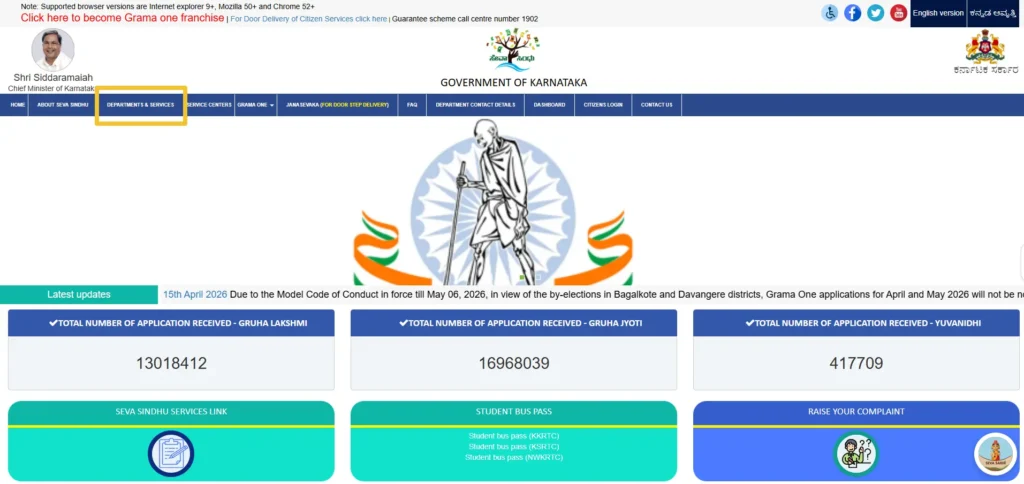
- Select Labour Department from the department list.
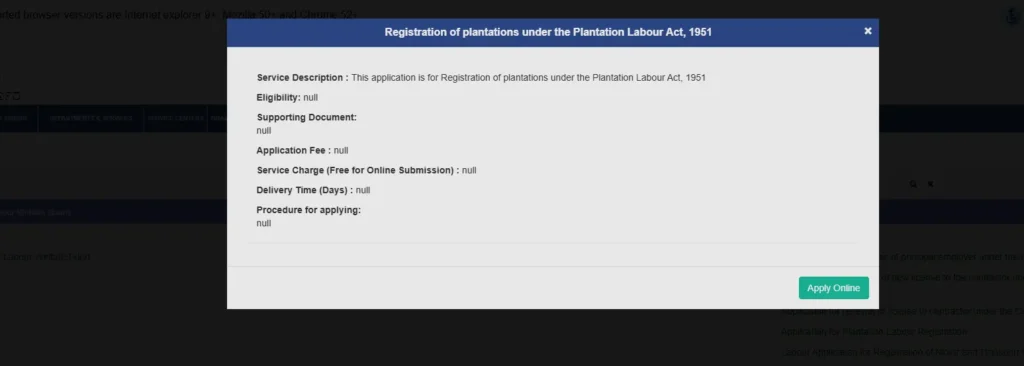
- Choose Registration under Karnataka Shops and Commercial Establishments Act.
- Fill in establishment details (name, address, nature of business, employee count).
- Upload required documents.
- Pay the registration fee online (varies by employee count).
- Submit the application.
- Download your Certificate of Registration once approved.
Working Hours and Overtime Rules
The Act sets hard limits on working hours:
- Maximum hours per day: 9
- Maximum hours per week: 48
- Mandatory break after: 5 continuous hours
- Break duration: Minimum 30 minutes
- Weekly off: 1 day mandatory
- Overtime rate: 2x ordinary wage
These rules directly affect payroll calculations, so a structured Karnataka payroll compliance approach is essential.
Leave Entitlements Under the Act
Employees covered by the Karnataka Shops and Establishments Act are entitled to three types of leave:
- Casual Leave: 12 days per year (short-notice personal leave).
- Sick Leave: 12 days per year (illness/medical reasons).
- Earned Leave (Privilege Leave): 1 day for every 20 days worked.
If an employee leaves with unused earned leave, you must encash it. Failing to do so is a violation.
Wages, Pay Day Rules, and Employment Terms
The Act regulates when and how wages are paid, as well as what wage deductions are allowed.
Pay Day Rules
- Establishments with fewer than 1,000 employees must pay wages by the 7th of the following month.
- Establishments with 1,000 or more employees must pay wages by the 10th of the following month.
In Karnataka, salary deductions also include statutory components like PT. You can review applicable slabs using the Karnataka PT calculator.
Deductions from Wages
You can only make deductions permitted under the Payment of Wages Act, 1936 (such as PF, ESI, PT, authorized loans, and advances).
Notice Period and Termination
If you terminate an employee who has completed more than three months, you must provide one month’s notice or wages in lieu of notice.
Maternity Benefits
You must comply with the Maternity Benefit Act, 1961 alongside the S&E Act. Eligible female employees are entitled to 26 weeks of paid maternity leave for the first two children.
Health, Safety, and Welfare Obligations
Inspectors verify these standards during visits. Your minimum obligations are:
- Keep premises clean and hygienic at all times
- Ensure adequate lighting in all work areas
- Provide proper ventilation (natural or mechanical)
- Supply clean drinking water for all employees
- Maintain adequate sanitation and toilet facilities
- Provide an accessible first-aid box
For establishments with a large number of female employees, separate sanitation facilities are required. The POSH Act, 2013 also requires an Internal Complaints Committee for businesses with 10 or more employees.
Penalties for Non-Compliance
Non-compliance can trigger financial penalties from day one of violation, with possible prosecution for repeated defaults.
- First offense: Fine up to ₹5,000 for most violations (overtime, leave records, etc.).
- Subsequent offenses: Higher fines and possible prosecution of the employer.
- Non-registration: Penalties begin from the mandatory registration date.
- Serious violations: Child employment, false records, or safety lapses can attract heavier penalties and possible shutdown action.
Key Risk: Labour Inspectors
Inspectors can enter your premises during working hours without prior notice and verify registers, wage records, and working hours on-site. Keep HR records audit-ready at all times.
How HR Software Bangalore Simplifies Compliance with the Karnataka S&E Act
Tracking attendance, overtime, leave, registers, and pay day compliance manually is difficult at scale. A single error can create a compliance gap.
HR Software Bangalore automates each of these requirements for Karnataka businesses:
- Attendance and overtime: Captures clock-in/out, flags overtime, and auto-calculates overtime pay.
- Leave management: Tracks casual/sick/earned leave, accruals, balances, and exit encashment.
- Wage registers: Generates Act-compliant registers for inspections on demand.
- Payday compliance: Payroll reminders help you avoid missing the 7th/10th wage deadlines.
For Bangalore businesses managing 50 to 500 employees, manual processes quickly become a hidden compliance risk. Schedule a demo to see how HR Software Bangalore handles Karnataka S&E Act compliance for your team size.
FAQs
All shops and commercial establishments operating in Karnataka must register under the Act within 30 days of starting business. This includes offices, retail stores, startups, and service-based businesses, regardless of size or employee count.
The Act allows employees to work up to 9 hours per day and 48 hours per week. Employers must provide a break after 5 continuous hours and ensure one mandatory weekly off day.
Any work beyond the prescribed daily or weekly limits qualifies as overtime. Employers must pay overtime wages at twice the ordinary rate of pay.
Employees are entitled to 12 days of casual leave, 12 days of sick leave, and earned leave based on days worked. Unused earned leave must be encashed when the employee exits.
Employers must pay salaries by the 7th of the following month if they have fewer than 1,000 employees, and by the 10th if they have 1,000 or more employees.
Failure to comply can lead to fines up to ₹5,000 for first-time violations. Repeated non-compliance may result in higher penalties, legal action, and prosecution.