![What is HRMS? A Complete Guide for Bangalore Business Owners [2026]](https://hrsoftwarebangalore.com/wp-content/uploads/2026/03/what-is-hrms.webp)
If you are running a business in Bangalore, whether it is a 15-person startup in Koramangala or a 400-person IT company in Whitefield, you have probably heard the term HR software in every HR conversation, software comparison, and LinkedIn post.
But what does HR software actually mean for your business? Is it just payroll software? Do you really need it at your stage? And most importantly, can HR software handle Karnataka’s compliance requirements like Professional Tax, ESI, and PF without errors? This guide breaks it down in plain language so you can make the right decision for your Bangalore business.
Key Takeaways
- HRMS automates payroll, attendance, compliance, and recruitment in one platform
- Karnataka businesses must handle PT, ESI, PF, and LWF - HRMS does this automatically
- HRMS is the best fit for Bangalore SMBs with 20-1000 employees
- Bangalore’s IT sector is known for relatively high employee turnover
- A good HR software often helps reduce manual effort and compliance risks, which can offset its cost over time.
What is HRMS?
HRMS stands for Human Resource Management System. It is a cloud-based solution that automates and centralizes every HR function in one place. Payroll, attendance, recruitment, performance reviews, statutory compliance, and employee self-service are all managed through a single dashboard.
What started as basic payroll tools has evolved into complete employee lifecycle management. From hiring to exit, HR software handles every process including payslips, leave requests, appraisals, and compliance filings.
For Bangalore businesses, HR software is no longer optional. With thousands of companies competing for talent and strict Karnataka compliance requirements, managing HR on spreadsheets creates risk and inefficiency.
HRMS vs HRIS vs HCM: What’s the Difference?
These three acronyms get thrown around interchangeably, but they serve different purposes. Understanding the distinction helps you invest in the right solution for your company’s stage and size.
| Feature | HRIS | HRMS | HCM |
|---|---|---|---|
| Full Form | Human Resource Information System | Human Resource Management System | Human Capital Management |
| Primary Focus | Employee data storage and records | Complete HR operations and automation | Strategic workforce planning and analytics |
| Payroll | Basic or none | Full payroll with statutory compliance | Advanced payroll and predictive analytics |
| Recruitment | Not included | Built-in ATS and onboarding | ATS, talent pipeline, succession planning |
| Performance | Not included | OKRs, reviews, 360° feedback | Advanced performance and learning |
| Compliance | Manual | Automated (PT, ESI, PF, LWF) | Automated, multi-country compliance |
| Best For | Small teams under 20 employees | SMBs and mid-market (20-1000 employees) | Large enterprises (500+ employees) |
| Typical Cost | ₹20-35/employee/month | ₹40-80/employee/month | ₹100+/employee/month |
For most Bangalore businesses, whether you are a 30-person Koramangala startup or a 500-person Whitefield IT company, HRMS hits the sweet spot. It gives you everything you need without the complexity and cost of enterprise HCM platforms. You get full payroll automation, Karnataka compliance, recruitment tools, and performance management in one package.
8 Features Every HRMS Should Have
Not all HRMS platforms are built equal. Before you evaluate options, here is what a complete HRMS must offer:
Payroll Processing: HR software should automatically calculate salaries, deductions such as PF, ESI, PT, and TDS, and generate bank transfer files. Payroll that takes days manually should be completed in minutes.
Attendance and Leave Management: GPS check-in, biometric integration, shift scheduling, and overtime tracking. Karnataka law mandates 9-hour daily and 48-hour weekly limits. Your HRMS attendance management module should track this automatically.
Statutory Compliance: This is where most national HR software fail Bangalore businesses. Your system must auto-calculate Karnataka Professional Tax (including the ₹300 February rule), file ESI and PF to the correct Bangalore regional offices, deduct LWF in June and December, and provision gratuity. If it cannot do this without manual intervention, it is not ready for Karnataka.
Employee Self-Service: Payslips, leave applications, tax declarations, reimbursement claims, and HR ticket raising, all accessible on a mobile app. This alone helps reduce routine HR queries significantly.
Recruitment and Onboarding: Post jobs to Naukri and LinkedIn from one dashboard, track candidates through interview stages, generate offer letters, and trigger automated onboarding workflows. In Bangalore’s competitive talent market, delays in hiring can result in losing strong candidates.
Performance Management: Set OKRs, run quarterly or annual appraisal cycles, collect 360-degree feedback, and calibrate ratings with bell curves. Structured performance processes directly reduce Bangalore’s chronic IT attrition problem.
Reports and Analytics: Headcount trends, attrition rates, payroll cost analysis, department-wise breakdowns, and compliance status dashboards. Data-driven HR decisions replace gut feelings.
Why Bangalore Businesses Need HRMS in 2026
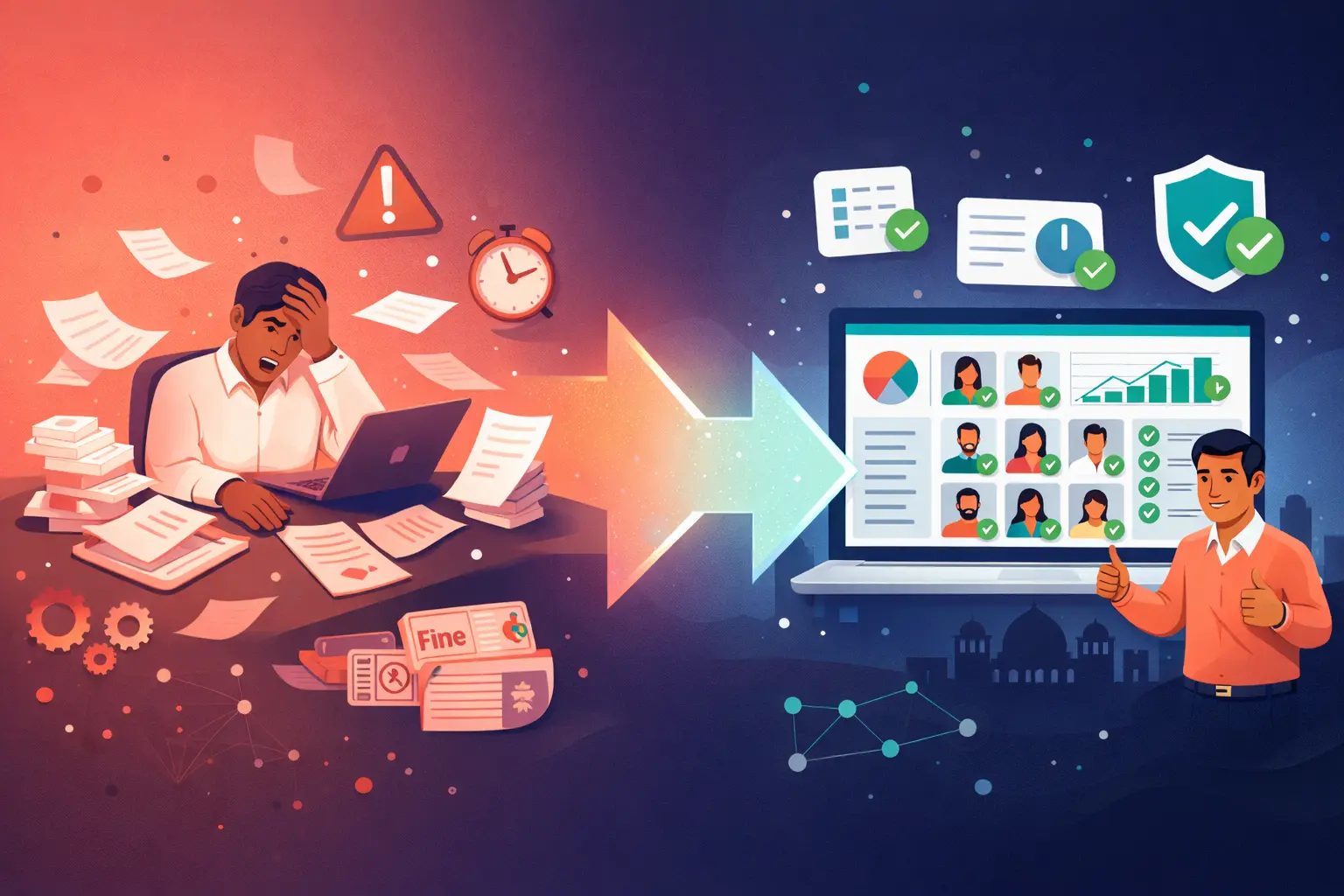
Every city has HR challenges. Bangalore has unique ones that make HRMS adoption particularly urgent.
Karnataka compliance is genuinely complex
Your business must handle Professional Tax with the updated 2025-26 slabs (including the ₹300 February deduction that trips up most manual calculations), ESI for employees earning under ₹21,000, PF contributions filed to the Bangalore EPFO regional office, Labour Welfare Fund deductions twice a year, and Karnataka Shops and Establishments Act provisions on working hours, overtime, and leave. Managing this manually across 50 or 100 employees is not just inefficient. Managing compliance manually increases the risk of errors, penalties, and delays.
Attrition in Bangalore’s IT sector runs between 15-25% annually
Without structured performance management, clear goal-setting, and regular feedback mechanisms, your best people leave for companies that offer these. An HRMS with built-in performance and engagement tools is a retention investment, not just an HR tool.
Multi-location and hybrid teams are the norm
Your developers might be in Whitefield, your sales team in Koramangala, and your support team working from home. A centralized HRMS gives you one dashboard to manage attendance, payroll, and compliance across every location and work mode.
Bangalore startups scale fast
Going from 10 employees to 200 in 18 months is common here. What works on spreadsheets at 10 people collapses at 50. HRMS grows with you, same system from your first employee to your five-hundredth.
The cost of getting it wrong keeps rising
A single missed PF filing can attract interest, damages, and even imprisonment under the EPF Act. A PT calculation error across 100 employees for 3 months creates a ₹92,000+ liability. HRMS eliminates these risks entirely.
How to Choose the Right HRMS for Your Business
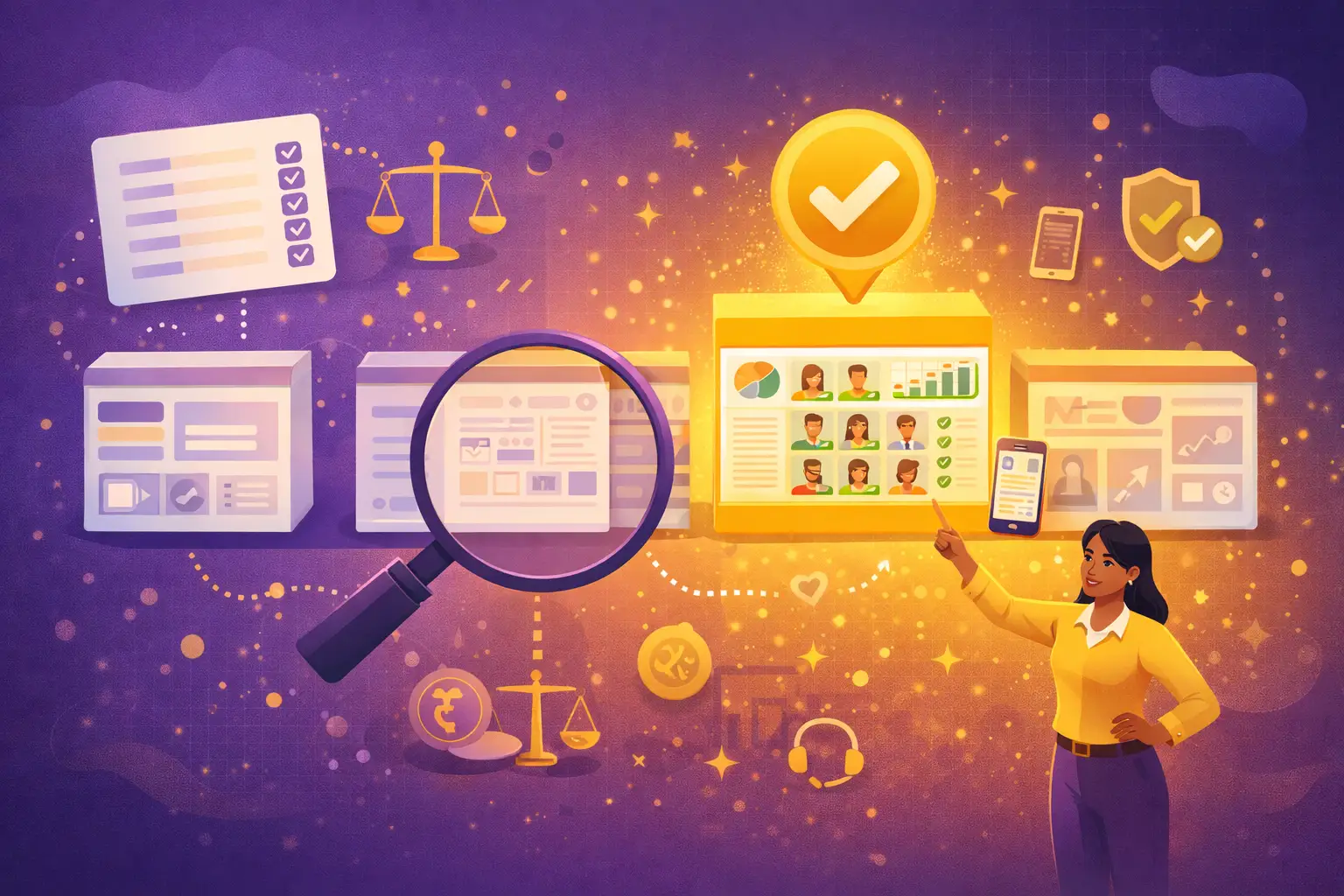
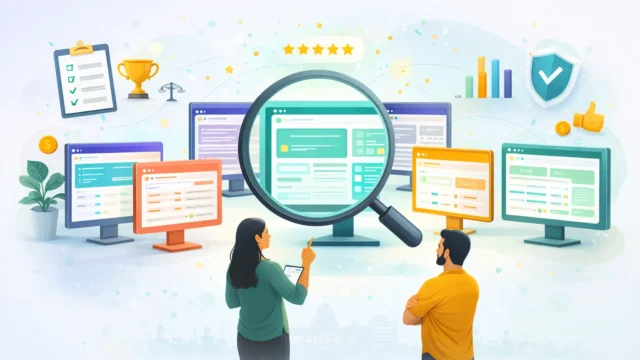
With dozens of HRMS platforms available, choosing the right one can feel overwhelming. Use this 7-point checklist to cut through the noise.
Does it auto-handle Karnataka PT, ESI, PF, and LWF? This is the number one deal-breaker for Bangalore businesses. If you have to manually configure Professional Tax slabs or remind the system about the February ₹300 rule, move on. Karnataka compliance should work out of the box with zero configuration.
Is payroll included or a separate product? Some platforms split HR and Payroll into separate subscriptions. You end up paying twice and managing two systems. Look for all-in-one platforms where payroll is fully integrated.
Does it have a mobile app for employees? Not just a mobile-responsive website. A proper iOS and Android app. Your employees should mark attendance, apply for leave, and view payslips from their phones without opening a browser.
What is the implementation timeline? Enterprise platforms can take 2-6 months to implement. For most Bangalore SMBs, you need a platform that goes live within one week. Anything longer and you lose momentum.
Is pricing transparent? Look for clear per-employee, per-month pricing on the website. If you have to “contact sales” just to see the price, expect surprises later.
Is there a local support team? When payroll is stuck at 11 PM on month-end, you need someone who picks up the phone in IST. Not a chatbot or a ticket system with 48-hour response times. Bangalore-based support makes a real difference.
Can you try before you buy? A 14-day free trial with full features tells you more than any demo or sales pitch. If a platform does not offer a free trial, ask yourself why.
If a platform checks all seven boxes, you have found the right HRMS for your Bangalore business.
How Much Does HRMS Cost in Bangalore?
HRMS pricing in India typically follows a per-employee, per-month model. Here is how the market breaks down.
Budget tier (₹35-50/employee/month). Platforms like sumHR offer basic HR and payroll at the lowest price point. Good for very early-stage startups that need minimal features. Karnataka compliance automation is typically limited at this tier.
Mid-range tier (₹50-80/employee/month). This is where most Bangalore businesses find the best value. Platforms like HR Software Bangalore (starting at ₹49/employee), greytHR, and Keka offer comprehensive features including full payroll, attendance, recruitment, and compliance automation.
Enterprise tier (₹100+/employee/month). Darwinbox, SAP SuccessFactors, and similar platforms cater to large organizations needing advanced analytics, custom workflows, and multi-country support. Typically overkill for companies under 500 employees.
From an ROI perspective, spending ₹49 per employee per month on HRMS saves your business ₹3-5 lakhs annually in compliance penalty risk alone, plus 40+ hours of HR team time every month. The software pays for itself within the first quarter. → Check our pricing
Frequently Asked Questions
HRMS stands for Human Resource Management System. It is a cloud-based software that automates payroll, attendance, recruitment, performance management, and statutory compliance for businesses.
Yes. HRMS is valuable from 10 employees onward, especially in Bangalore where Karnataka compliance (PT, ESI, PF, LWF) is mandatory regardless of company size. The cost of manual errors far exceeds the software subscription.
Payroll is one module within a full HRMS. While payroll software only handles salary processing and deductions, HRMS additionally covers attendance tracking, recruitment, performance management, employee self-service, and compliance automation.
Good HRMS platforms auto-calculate Karnataka PT based on the 2025-26 slab rates, including the ₹300 February deduction rule. They also generate e-PRERANA challans for filing. Always verify this capability before purchasing. Many national platforms handle it poorly.
For most Bangalore SMBs, implementation takes 2-7 days depending on company size and data complexity. Enterprise implementations can take longer. HR Software Bangalore completes full setup within 48 hours including data migration and compliance configuration.